
Hey everyone, it’s the Barn Geek here. Today, I received a question via email that I wanted to address in this video. The question is: what is the ideal moisture content for building a barn with timber? Is my lumber too wet?
Now, when it comes to moisture content, there’s not a one-size-fits-all answer, but I’ll do my best to provide some guidance.
For softwoods like pine, aiming for a moisture content between 18 to 20 percent is generally ideal. Hardwoods, on the other hand, can usually do well with a slightly lower moisture content, around 12 percent. However, it’s important to note that achieving exactly these percentages isn’t always necessary or practical.
Traditionally, barns have been built using green timber, meaning the wood hasn’t been fully seasoned. This method has been employed for centuries because builders understood how wood behaves as it dries and seasons. The key is to work with the characteristics of the wood, ensuring that any potential movement or changes in the wood’s shape won’t compromise the structure.
When selecting timber, avoid severely warped or twisted logs, as these may pose challenges during construction. It’s also worth noting that certain species, like white pine or Douglas fir, are generally more forgiving in terms of moisture content compared to others.
If you’re harvesting your own timber, consider cutting it during the winter when the sap content is lower. Then, allow the timber to season gradually, either by sawing it into beams or stacking it with adequate airflow. Painting the ends of the timber can help prevent rapid drying.
While moisture content is important, it’s also essential to allow the structure time to acclimate to its environment. Rushing the process by enclosing the structure too quickly can lead to issues like trapped moisture, which can affect the integrity of the building over time.
In summary, while aiming for specific moisture content levels can be beneficial, it’s equally important to understand the behavior of the wood you’re working with and to allow the structure time to adapt naturally. Building a barn is a process that requires patience and a respect for the materials involved.
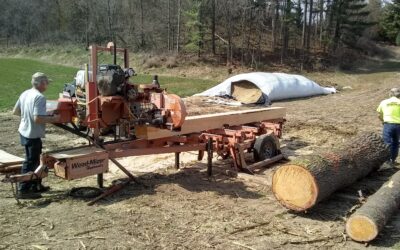
Is it worth while to have a local sawmill cut some or all of my Barn Lumber or even do it myself?
We have a LOT of eastern red cedars, Tulip Poplars, among other species. If I have a local sawmill cut our pieces for us, would you expect a significant savings overall?
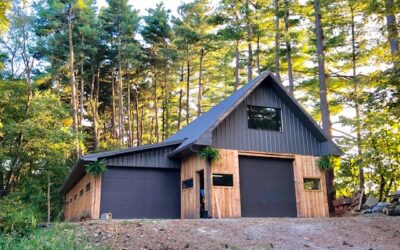
Pride and Accomplishment in Having Built a Barn Myself
Besides the utility of having a barn and the value it adds to our property, having built the barn myself has given me a sense of pride and accomplishment that’s hard to place a value upon.
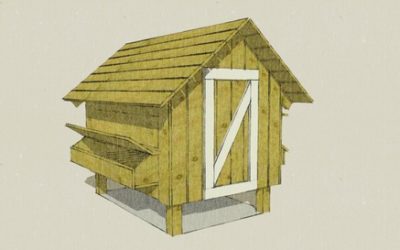
Free Chicken Coop Plans
You can build this hen house with these free chicken coop plans. It is easy to do. All you need is some rough cut lumber, a hammer, nails, and a circular saw. You can even build one with regular dimensional lumber from your local lumber yard. I built one like this for...
36 egg incubator reveiw. Trying an incubator from amazon.
In may of 2024 my husband and I decided to purchase an incubator in the hopes of hatching some cute silkie chicks for our son to enjoy. We bought eggs from local breeders to hatch along with sticking some layer mixes from our own farm in. As a busy family with my...
Best exterior coating for a barn?
Question asked in the BarnGeeks Facebook Group 4/21/24 Does anybody have any recommendations of the best exterior coating for a 40x60 gambrel? Unfortunately the wood is not rough cut so it won't absorb as well as all of the beams and the frame. I used iron oxide mixed...
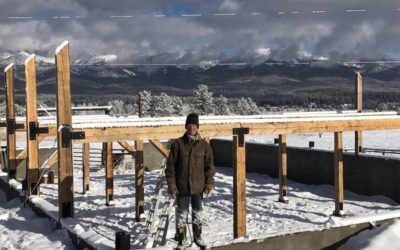
Rebuilding Tradition: A Family’s Journey with BarnGeek’s Gambrel Timber Frame Barn
The old 40 x 60 barn my grandfather built in the forties collapsed in a snowstorm in 2015. I wanted to replace it with a similar style so I chose the 40 x 60 gambrel.
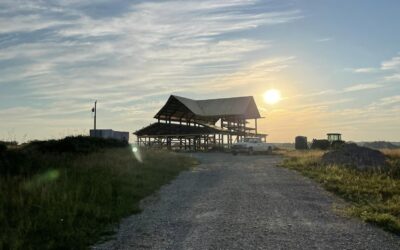
Fall 2019 to Now: The Story of Our 44×60 BarnGeek Barndominium!
We are thrilled to share an inspiring story from one of our Barn Plans Library members. This family embarked on a remarkable journey to transform our BarnGeek 40x50 plan into their dream home. Back in the fall of 2019, they decided to mix a couple of our plans,...
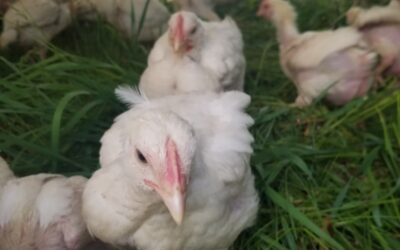
The Best Treats for Your Chickens this Summer
What are the best treats for my chickens? What can I safely feed my chickens? Let's look at some common chicken treats and what makes them good for you (your wallet) and your chickens! 1. Food scraps Low waste, low cost, and tons of fun! What could be better? Chickens...

Barn Kits Available Now!
Full Barn Kits are Back! Have you thought to yourself, “I would sure love to build one of those BarnGeek Barns but I just wish I could get everything I need to build it in one all inclusive kit!” Well, today is your lucky day! We are proud to announce...
Recent Comments